

What Taiwan Reinforced for Me About Innovation at Scale
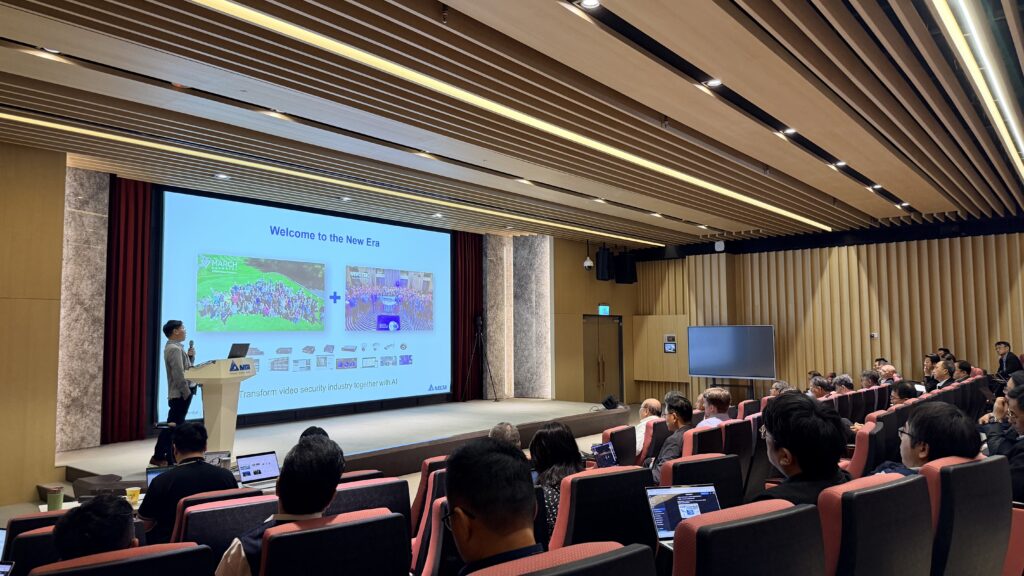
Last month, I had the opportunity to present on Technical Strategy Management to Delta Electronics leadership in Taipei, Taiwan. It was one of those moments that stays with you, not only because of the setting, but because of what it revealed.
In large organizations, people often assume innovation moves slowly. They expect hierarchy to dilute ideas before they ever reach decision-makers. But my experience in Taiwan was the opposite. What stood out most was the willingness to engage deeply with strategy, technology, and long-term direction. It reinforced something I believe strongly: the best innovation cultures do not reward ideas based on title. They reward ideas based on clarity, relevance, and potential impact.
That matters as we think about the future of video security.
The market is moving beyond a world where video systems are judged primarily on recording, storage, or basic investigation workflows. Customers increasingly want outcomes. They want to reduce risk faster, investigate faster, connect video to operational data, and act with greater confidence on decisions when they matter most. That shift changes what R&D must focus on. It also changes how leadership teams think about where long-term value will come from.
For me, the experience in Taiwan was not just about presenting a strategy deck. It was about validating that the next phase of innovation for March Networks, VIVOTEK, and Delta Electronics will be shaped by a shared belief that practical, ambitious ideas deserve the room to grow.
Why Agentic AI Is the Right Path for What Comes Next
Agentic AI is one of those terms that can easily become vague if it is not grounded in real-world use cases.
For me, the easiest way to define it is this: agentic AI is what happens when video intelligence moves beyond detecting and describing events and begins to support its reasoning and action.
In the past, most video systems were passive by design. They captured footage and stored it. They helped people look back at moments in the past. Even newer AI systems often focus mainly on identifying objects, attributes, or scenes more quickly. That is valuable, but it is still only part of the story.
The next era is about investing in systems that can interpret context, connect multiple data sources, and help organizations act more intelligently. In our strategy work, we have been focused on a model that brings together perception, reasoning, and action, supported by governance. In practical terms, that means combining video feeds, business systems, policies, and workflow triggers so AI can do more than surface an alert. It can help orchestrate the next best step.
That is where agentic AI becomes meaningful.
It means a system can recognize unusual behavior, relate it to business context, and support a response. It means security and operations teams are no longer buried under disconnected alerts or forced to manually piece together what happened across cameras, systems, and sites. It means the platform starts to function less like a passive archive and more like an intelligent operational layer.
Importantly, this should not be confused with unchecked autonomy. The most valuable form of agentic AI is not AI acting alone. It is AI acting with accountability.
From Video Infrastructure to Autonomous Outcomes
One of the biggest mindset shifts happening across our industry is that customers are no longer evaluating technology only as a collection of hardware and software components. They are evaluating whether the overall system can deliver measurable outcomes.
That is why I believe the future belongs to platforms that are integrated by design.
Our strategic direction is grounded in an API-first, multi-layer approach that connects the edge, NVR, cloud, AI, and enterprise integrations. This matters because agentic AI cannot thrive in silos. It needs access to the full environment: video, transactional data, sensors, business rules, workflows, and escalation paths. Without that, AI may generate interesting observations, but it cannot reliably support decisions.
The more useful question is not, “Can AI identify this object?” The better question is, “Can the platform understand what this event means in context, and can it help the organization respond appropriately?”
That distinction opens the door to entirely new use cases.
A system can dynamically allocate resources based on activity. It can support cross-camera tracking, so incidents are understood as continuous events rather than fragmented clips. It can trigger incident workflows that notify the right people, surface the right context, and accelerate response times. It can help reduce investigation effort while improving consistency and auditability.
This is also why I believe the winners in this space will not be defined by AI models alone. Better outcomes come from the combination of better imagery, better models, and application-driven design. Customers do not buy intelligence in the abstract. They buy solutions to problems they face every day, whether that is theft, fraud, compliance, safety, queue management, or operational efficiency.
When agentic AI is built the right way, video becomes more than evidence. It becomes operational intelligence.
Why the March Networks and VIVOTEK Integration Matters
This is also why the combined strength of March Networks and VIVOTEK matters so much following the merger.
Too often, industry conversations separate hardware innovation from software innovation, as if one can advance meaningfully without the other. But the reality is that agentic AI depends on both. Hardware without intelligent software risks becoming commoditized. Software without strong edge context, imaging performance, and system integration has limits. One of the strongest themes in our strategy work is that the combined ecosystem creates a more optimized foundation for what comes next.
That foundation is not just technological. It is organizational.
As our integrated teams move forward, we are bringing together scale, specialized expertise, and a broader innovation footprint. The combined organization spans six continents and more than 70 countries, with more than 300 engineers across R&D Centers of Excellence in Canada, Taiwan, Poland, and Italy. That kind of footprint matters because the future of video intelligence will require deeper collaboration across video imaging, cloud, AI, applications, integrations, and industry-specific workflows.
For customers and partners, this should not be viewed simply as a bigger portfolio. It should be understood as a stronger, integrated platform for innovation.
This means more opportunities to unify edge and cloud solutions, with more opportunities to connect video security with operational workflows. More opportunities to develop solutions that are tuned to vertical needs in retail, banking, quick-service restaurants, transit, and other environments where speed, accountability, and context matter.
In short, the combination gives us a stronger starting point for the next era of video intelligence.
What the HQ R&D Summit Made Clear
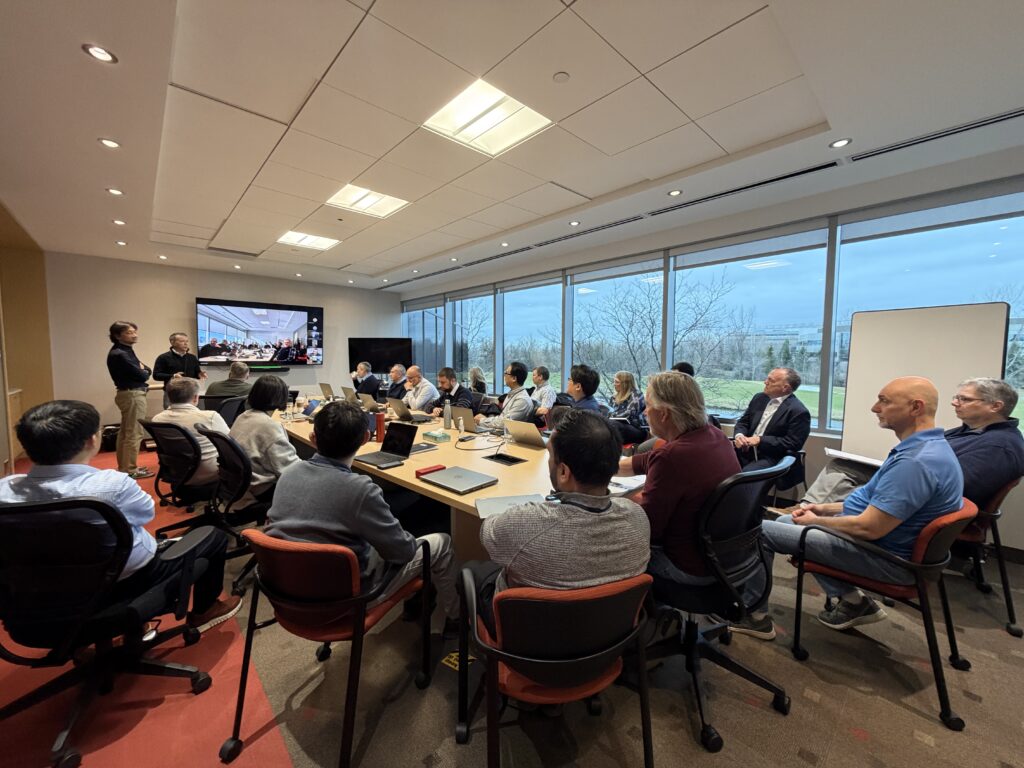
Shortly after the Taiwan presentation, we brought together our R&D teams from Taiwan, Poland, and Italy for a week of sessions at our headquarters in Ottawa, Canada.
For me, that week was important for one simple reason: it allowed us to step back from day-to-day execution and align on where we believe the market is heading over the next five to ten years.
Those conversations reinforced several themes.
First, the industry is moving from video surveillance to video intelligence. That may sound subtle or vague, but it is a major shift. It means the role of the platform is expanding from observation to interpretation and support for action.
Second, the path forward is not just from generative AI to agentic AI as a technology progression. It is also a progression in how product teams think, build, and collaborate. The strategy work finalized at the summit emphasizes an API-first platform approach, clearer service activation, stronger vertical alignment, and more explicit customer ROI. It also points toward new ways of working, including AI-driven software development and growing investment in AI-centric skills and architecture.
Third, the future of security will increasingly overlap with operations. That is a meaningful shift. Video systems will not only help organizations understand security incidents. They will also help them improve performance, reduce waste, identify process breakdowns, and make faster cross-functional decisions.
That is where I see the biggest long-term opportunity.
The conversation is no longer only about protecting assets. It is about helping organizations use intelligence from their physical environments more effectively. In that world, agentic AI becomes a bridge between visibility and action.
Building the Next Era Responsibly
Whenever people talk about AI becoming more autonomous, the conversation should include governance.
In our view, autonomy only creates value when it is paired with accountability. That is why control and governance are not side considerations. They are part of the architecture itself.
Policy enforcement, escalation thresholds, audit logs, human-in-the-loop review, privacy protections, and bias mitigation all matter because customers need to trust how decisions are being supported. In many real-world environments, AI should accelerate triage and provide better context, while humans remain responsible for the most critical decisions.
This is especially important in the industries we serve.
In retail, that may mean helping teams identify suspicious activity faster while improving the consistency of investigations. In banking, it may mean connecting video intelligence with ATM activity, fraud signals, and compliance workflows. In quick-service restaurants, it may mean improving queue management, service performance, and operational visibility across locations. These are not abstract future scenarios. They are examples of how agentic AI can create practical value when it is grounded in business context.
That is the future I believe March Networks and VIVOTEK are building toward. Not AI for its own sake. Not autonomy without oversight. Not more complexity layered onto already fragmented systems.
Instead, we are working on developing a more connected, accountable, and outcome-driven model for video intelligence.
After our conversations in Taipei and Ottawa, I am more convinced than ever that this is the direction our industry is moving. The real opportunity now is for our team to build it in a way that customers can trust, adopt, and scale.
That is the journey our team is marching toward. And it is exactly the kind of work that makes this moment so exciting.
Frequently Asked Questions
Q: What is agentic AI in video security?
A: Agentic AI in video security refers to systems that go beyond detection or search to support reasoning and action. Instead of only identifying what appears in a scene, the system can connect context, policies, and workflows to help organizations respond more intelligently.
Q: How is agentic AI different from traditional video analytics?
A: Traditional video analytics typically focus on detection, classification, or alerting. Agentic AI builds on that foundation by combining perception, reasoning, and action across video, business systems, and operational workflows.
Q: Why does the March Networks and VIVOTEK combination matter for agentic AI?
A: Because the next era of video intelligence depends on tight integration between edge devices, imaging, cloud, AI, and workflow systems. The combined organization strengthens that foundation and expands R&D scale across multiple centers of excellence.
Q: What did the Ottawa R&D Summit focus on?
A: The summit brought together R&D teams from across different regions to align on long-term strategy, including the move toward agentic AI, AI-driven software development, stronger platform thinking, and a more integrated view of security and operations.
Q: How should organizations prepare for agentic AI adoption?
A: Start with clear use cases, trusted data, and strong governance. The most successful adoption paths will focus on measurable business outcomes, phased deployment, and keeping humans in the loop for critical decisions.
Frank Ouyang is the Vice President of Research & Development at March Networks and VIVOTEK, where he leads innovation in video-based business intelligence and applied AI solutions. With extensive experience in software and business intelligence development, Frank is passionate about driving next-generation technologies that deliver practical, real-world impact.