

A Defining Moment for the Video Security Industry
As Chief Sales & Marketing Officer at March Networks, I spend a lot of time with customers, partners, and our teams around the world. What I am hearing is clear. The expectations for video have fundamentally changed.
The video security industry is entering a new phase and is now being shaped by two forces at once: the growing demand for integrated, end-to-end solutions and the rising investment required to innovate in AI, analytics, cloud, and enterprise video management.
For years, many organizations built their video environments one layer at a time. Cameras came from one provider, software from another, analytics from somewhere else, and integration became the customer’s responsibility. That model made sense in an earlier stage of the market, but it is no longer aligned with what customers need today, or what they need to prepare for tomorrow.
What we are hearing from customers and partners is clear. They are not looking for more fragmented technology. They are looking for simpler ways to deploy, manage, and scale video systems that deliver meaningful outcomes across security, operations, and business performance.
Customers expect more than visibility. They expect insight. They expect outcomes. And they expect systems that scale across locations, environments, and business needs.
That is why this merger matters.
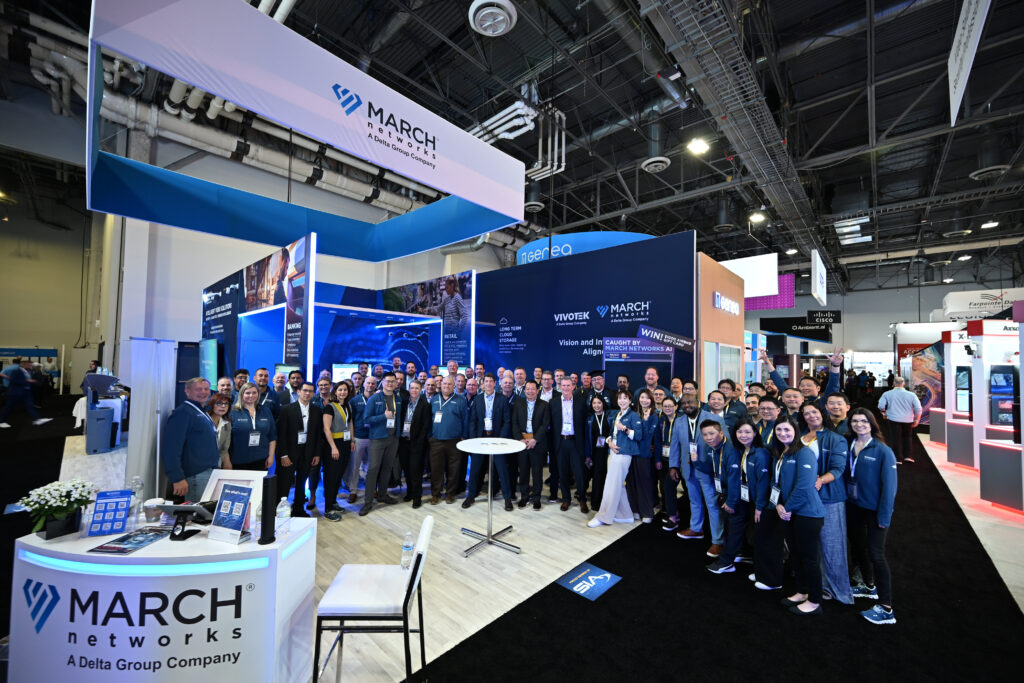
Bringing March Networks and VIVOTEK together is not about scale alone; it’s about aligning complementary strengths around the future of the market. Together, we are building something more complete. More connected. And more valuable for customers.
This merger positions us to lead as the video security industry undergoes a fundamental shift. Customers want integrated intelligence, not disconnected components. Partners want a broader, more cohesive portfolio. And the companies that can innovate at scale will be the ones that define what the next era of video intelligence looks like.
VIDEO: Hear from the leadership team of the combined March Networks and VIVOTEK on how this merger helps us innovate and serve customers better than ever before.
Why Integration Has Become a Market Requirement
For years, customers have had to bridge gaps between hardware and software. Between edge and cloud. Between security and operations.
That friction slows down outcomes.
By bringing these capabilities together, we are removing that friction.
March Networks brings deep experience in enterprise video management, analytics, and business intelligence. VIVOTEK brings proven strength in cameras, AI, and direct-to-cloud solutions. Together, these capabilities create a more powerful, unified solution—expanding what’s possible for customers and partners.
Customers now benefit from:
- Tighter integration between cameras, video management, and analytics
- Faster innovation across both hardware and software
- A more seamless path from data capture to actionable insight
- Greater flexibility across cloud, hybrid, and on-premise deployments
This is about simplifying complexity. And turning video into a true business intelligence tool.
In the past, buyers often accepted complexity as part of the process. Today, they want accountability, speed, and flexibility. They want to know that the cameras, software, analytics, and deployment models are designed to work together. They also want the freedom to move at their own pace, whether that means adopting cloud, staying hybrid, or maintaining on-prem deployments where that makes the most sense.
This is where integration becomes more than a technical advantage. It becomes a competitive and operational advantage too.
Why Scale Now Determines Who Can Lead
There is another reality shaping the industry right now. Innovation is getting more expensive.
AI is changing how video systems are designed, how data is processed, and what customers expect from their environments. That shift requires more engineers, more infrastructure, more investment in product development, and more capacity to bring new capabilities to market. This is one of the core reasons the merger expands more than just our portfolio. It expands our innovation capacity, global reach, and engineering strength. The combined organization is expected to operate across more than 75+ countries, with more than 300 engineers across four Centers of Excellence and a network of more than 1,100 certified channel partners and 200+ distributors globally.
With lightning-fast advancements in AI, the R&D required to continuously build new and innovative technology is incredibly important. Smaller players across the industry will not be able to keep up.
That is an important point, and one that many companies are still underestimating. The future of video intelligence will not be shaped by who can talk most loudly about AI. It will be shaped by those who can turn innovation into practical, scalable solutions that solve real business problems.
Scale is not just a story about growth. It’s also a story about capability.
The March Networks and VIVOTEK video security merger is about building capability. It gives both organizations more technical depth, broader geographic reach, and a stronger foundation for long-term product innovation. It also strengthens the ability to serve multinational customers while continuing to support customers operating within a single country or region.
Video Is No Longer Just About Security
The most important shift in the industry will not be about hardware or even deployment models. It will be about how organizations think about video in the first place.
Historically, video was mostly reactive. Systems captured footage, and teams reviewed it after an incident, while most of what was recorded was never actually analyzed. Now, video has moved beyond security. AI advancements enable systems to analyze and surface the insights that customers need.
The value of video has changed entirely.
Video is becoming a business intelligence platform by helping organizations understand customer behavior, track health and safety risks, improve operations, identify fraud, validate compliance, and surface patterns that were previously invisible. It is moving from passive recording to active insight.
Our customers are using video to improve operations, reduce loss, optimize staffing, and enhance customer experience. That requires more than cameras. It requires intelligence.
March Networks has built a strong foundation in this space with solutions like Searchlight Cloud and advanced analytics.
It’s operational intelligence to help business owners ask and discover: “How do we improve our top line with deeper knowledge of what’s happening in our physical locations?”
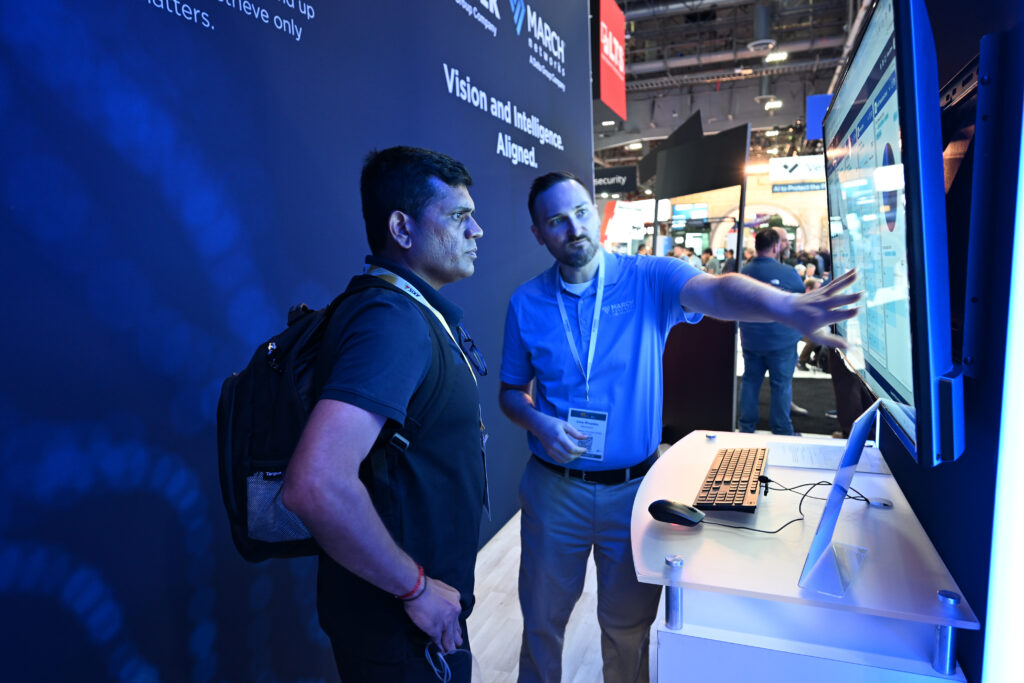
This is one of the strongest reasons the merger is strategically important. When a company can combine vision at the edge, with analytics, enterprise video management, and business intelligence higher up the stack, it can do more than secure an environment. It can help customers understand what is happening in their physical operations and act on that information faster.
That means:
- Faster investigations with AI-powered search
- Real-time visibility across locations
- Better decision-making using video data and analytics
- Measurable impact on business performance
That is the kind of shift that defines a category, not just a company.
The Real Opportunity Is in Vertical and Commercial Applications
Across banking, retail, transit, and commercial environments, the core video infrastructure often looks similar. What changes is the application layer, and the kind of value customers are trying to unlock. The underlying technology is similar across those markets, but the most interesting shift is happening in the applications built on top of the video infrastructure.
In transportation, that can mean safety, driver behavior, or revenue validation. In retail, it can mean understanding customer flow, store conversion, and operational execution. In banking, it increasingly means addressing fraud while supporting the reality that branches now operate much more like retail environments. And with VIVOTEK’s strength in broader commercial markets, the combined organization is better positioned to expand into a wider range of sub-verticals and customer environments.
This approach is about delivering complete solutions that drive measurable value.
What Customers and Partners Should Expect
With any merger, the first question customers and partners ask is simple: what changes for me?
The answer here should be reassuring.
The merger expands the available solution portfolio while maintaining the brands, support teams, and technology platforms that customers and partners already trust. Existing relationships continue without interruption, and current products, channel partnerships, technology partnerships, and integrations remain in place as the two organizations align their portfolios and roadmaps.
Customers and partners will continue working with the same teams they know and trust, while benefiting from greater scale, more choice, and broader global coverage.
For partners, this also creates a stronger commercial story. A broader, more integrated portfolio is easier to position, easier to align to customer needs, and stronger across cloud, hybrid, and on-premise deployments.
The combination of continuity and expanded capability is important. It means the value of the merger is relevant now and for the future.
Looking Ahead
The most important thing about this merger is that it is aligned to where the industry is going, not just where it is today.
Video is becoming smarter. AI is making more continuous analysis possible. Customers are demanding solutions that are more integrated, more scalable, and more relevant to business performance, not just post-incident review. At the same time, the industry is still sorting out which innovations will create lasting value and which will turn out to be noise.
We are candid about that reality. There are going to be some technologies that don’t really solve a business problem, and some that nobody expects to be very successful that are actually going to be widely adopted.
The goal is not to chase every new capability. It is to stay close to customers, understand what problems actually matter to them, and build solutions that are practical, scalable, and commercially meaningful.
Looking ahead, this is about much more than combining portfolios. It is about building the kind of integrated, insight-driven video intelligence platform customers will need in the years ahead. And with our combined strength, I believe this puts us in a unique position not only to deliver more value today, but to help lead and define where the market goes next.
Frequently Asked Questions
What does this merger mean for customers?
Customers gain access to a broader, more integrated portfolio with no disruption to existing products, teams, or support.
Will March Networks and VIVOTEK remain separate brands?
Yes. Both brands will continue to operate under Delta while aligning operationally.
What makes this merger different from others in the industry?
It brings together complementary strengths across cameras, software, AI-powered analytics, cloud, and enterprise video management to create a more complete end-to-end solution.
How does this benefit partners?
Partners gain a stronger portfolio, greater flexibility across deployment environments, and a more unified ecosystem that is easier to position and sell.
Net Payne is the Chief Sales & Marketing Officer for the combined organization of March Networks and VIVOTEK, based in the Atlanta Metropolitan Area. With over 20 years of experience in B2B technology across sales, marketing, and product management, Net leads global go-to-market strategy, driving growth, profitability, and market expansion. Known for his ability to align technology innovation with real customer outcomes, he is passionate about helping organizations unlock the full value of video intelligence.